

A year-of-impact board your supporters can actually feel
Every nonprofit has moments when it has to answer the same question.
What changed because we were here?
Usually, that answer starts with numbers.
Meals served.
Students reached.
Families supported.
Hours volunteered.
Dollars raised.
Those things matter. They should.
But numbers are only part of the story.
The other part is human. It lives in the thank-you someone wrote after a hard season. In the photo from a community garden that finally bloomed. In the volunteer who says, “This place changed me too.” In the quiet sentence from someone who felt seen, helped, or welcomed.
That is the part people remember.
That is where a year-of-impact board can be so powerful.
A different way to show what your work meant
A year-of-impact board is not just a collection of updates.
It is a place where the meaning of the work can gather.
A donor can read it and feel closer to the mission.
A volunteer can see the bigger picture they were part of.
A board member can understand the year in a more human way.
A partner can see not just what happened, but who was touched by it.
That is what makes this such a strong use of Bravoboard.
It brings together the warmth of a thank-you wall and the substance of mission storytelling.
Why this feels different from an annual report
Annual reports matter. They create structure. They show progress. They help tell the story of a year with clarity.
But they do not always make people feel the work.
A board can do that.
It gives your organization one place to gather short reflections, photos, gratitude, and real moments that might otherwise stay scattered across inboxes, event notes, and memory.
It can sit alongside your annual report, not replace it.
The report explains.
The board helps people connect.
Together, they are much stronger.
What can go on the board
The beauty of this kind of board is that it does not need long essays to be meaningful.
You can invite:
- short reflections from people your organization has supported
- thank-yous to staff or volunteers
- notes from donors about why they give
- photos from programs, events, or community moments
- a sentence or two from volunteers about what they witnessed
- messages from partners or sponsors
- simple stories that show what changed
Not every post has to be dramatic.
In fact, the quiet ones are often the most moving.
A short line like “I felt less alone this year” can land more deeply than a page full of polished copy.
Who can help shape it
This kind of board usually comes together best when a few different people help.
Program staff often know which stories feel true and safe to share.
Communications or development staff can help frame the invitation so it feels warm and easy to respond to.
Leadership can help set the tone by making sure the board reflects the organization honestly, with dignity and care.
That matters, especially when your mission touches real pain, vulnerability, or private parts of people’s lives.
Keep dignity at the center
This is the most important part.
A year-of-impact board should never make people feel like examples instead of people.
It should not pressure anyone to be publicly grateful.
It should not turn hardship into a marketing device.
It should not ask for stories that someone is not comfortable sharing.
Instead, it should make room for truth, choice, and respect.
Sometimes that means using only first names.
Sometimes it means sharing a volunteer’s reflection rather than a client story.
Sometimes it means choosing one quiet photo over ten more dramatic ones.
The goal is not to make the story louder.
The goal is to make it more human.
Public or private both can work
One of the nice things about a board like this is that it can meet different moments.
Some nonprofits may want to embed it on their website so visitors, supporters, and partners can see a living picture of the year.
That can work beautifully when the stories and images are meant for a wider audience.
Other organizations may want to keep it link-only.
That can make more sense when the board is meant for donors, volunteers, board members, or a smaller circle of supporters.
Neither choice is more “right.”
The better question is simply:
Who is this for, and what kind of sharing feels respectful?
If the stories are tender, quieter is often better.
Why supporters respond to this kind of storytelling
People do not stay connected to a mission only because of metrics.
They stay because they remember why it matters.
A board helps with that.
It gives a donor something more human than a receipt.
It gives a volunteer a way to feel part of a larger whole.
It gives corporate partners a window into impact that feels real, not overproduced.
It gives your community a place to see that their time, care, and generosity became something meaningful.
That kind of memory matters.
It is often what helps people keep saying yes.
This is where corporate and mission storytelling meet
This is one of the most interesting things about this use case.
A board like this can speak to two audiences at once.
It can be warm and emotional enough for your core community.
And it can still be clear and polished enough for funders, sponsors, and corporate partners.
That is a rare balance.
Most donor communication either feels too formal or too sentimental. A year-of-impact board can sit right in the middle. Honest, heartfelt, and grounded.
Not slick.
Not cold.
Just real enough to trust.
A simple rhythm works best
This kind of board does not need to be built all at once.
You can gather contributions over a few weeks near year-end, after a campaign, or before a donor event.
Start with a few trusted voices so the board has shape.
Then invite others in:
- staff
- volunteers
- community members
- partners
- donors, if that feels right
Once it feels full, you can decide how to share it.
On your website.
In a year-end email.
At an event.
As part of a board packet.
Alongside your annual report.
Because everything is already gathered in one place, it becomes much easier to use well.
Why this is such a good fit for Bravoboard
A lot of people think of Bravoboard as a place for celebration, appreciation, or milestones.
That is true.
But this kind of post shows something bigger.
It shows that Bravoboard can also help an organization gather the human side of its work. Not just a thank-you, not just a campaign, but a fuller picture of what a year meant.
That makes it a lovely bridge between nonprofit storytelling and supporter care.
It gives the mission a place to breathe.
If you are the one putting it together
Keep it simple.
Choose a warm title.
Invite people gently.
Ask for short, honest contributions.
Be thoughtful about privacy.
Let the board grow at a human pace.
You do not need every story.
You do not need the perfect quote.
You do not need to prove everything in one place.
You are simply making room for people to feel what the year meant.
And for a nonprofit, that can be one of the most valuable things you share.
Ready to collect messages? Create your board in 60 seconds.
Create your boardComments
Comments appear after a quick review (usually within 3 hours). Be kind and on-topic
Comments (1)
this is a good point. numbers matter but theyre usually not the part ppl remember later
Add a comment
Thank you—we received your comment
Comments appear after a quick review (usually within 3 hours).
See it in action
Explore the sample boards below, then create your own for your group.
⟡ Bravoboard Samples
Get inspired by real boards
Real sample boards for everyday celebrations and milestones. Explore Bravoboard use cases
Sample gallery
Occasion and celebration boards
Browse sample boards and digital celebration walls for birthdays, holidays, work anniversaries, thank-yous, farewells, and more. Each link opens a real Bravoboard so you can see how people add messages and photos on a shared page—the same experience you get for personal boards. If you are also evaluating Bravoboard for a workplace, there are additional samples below for branding and admin-friendly privacy and moderation controls.
Sample board links open in a new browser tab.

Happy Holidays

Work Anniversary


Happy Birthday!

Get Well Soon / Recovery

Deepest Sympathies

Virtual going away card

Work Promotion

Joy and Wonder!

Celebrating Parents

4th July Holiday

Just Be Creative
Looking for workplace-oriented examples? Samples below cover branding, access rules, moderation, and embed settings.
Team plan
What guests see (Live boards)
Open a sample to experience the board the way a visitor does. For Opt-in & acknowledgement and Contributor question, open the board and then use Add message (or your board’s equivalent)—those controls appear on the new-post form, not the wall.

Branded board
See your logo and background on the wall so the board feels on-brand for your organisation.

Password to view
Guests must enter the password before they can see the board. Try adding a message, use BRAVO as the password to unlock.
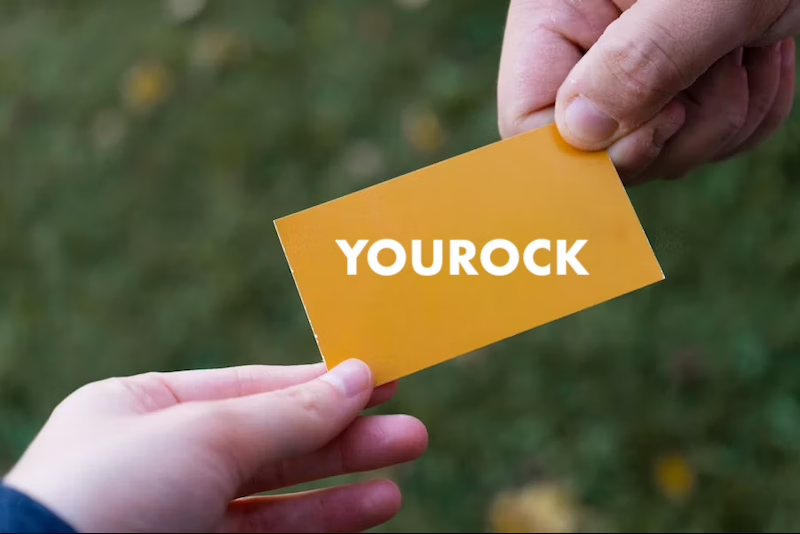
Post with Code / Invite only
Anyone who can view the board still needs the posting code before they can add a message. Try adding a message, use invite code YOUROCK when prompted.

Opt-in & acknowledgement
Open the board, then start a message—guests see your notice and must tick to acknowledge before they can post. Bravoboard records each acknowledgement with a timestamp.

Contributor question
Same flow: open the board, then add a message—guests see your custom yes/no checkbox (your wording). Look for [] I would like to be included in future opportunities, in this example.

Embed & domain restriction
The same board experience, meant to be embedded on sites you have allowlisted.
Guests never see moderation queues or approval screens—those are for board owners and team admins. Use the Screenshots — how teams govern boards row for post review settings and the pending queue.
Team plan
How teams govern boards (screenshots)
These panels are where your team set rules.
Click a screenshot to open a larger view. Cards with several panels group those steps together—use the arrows in the viewer to follow the workflow.
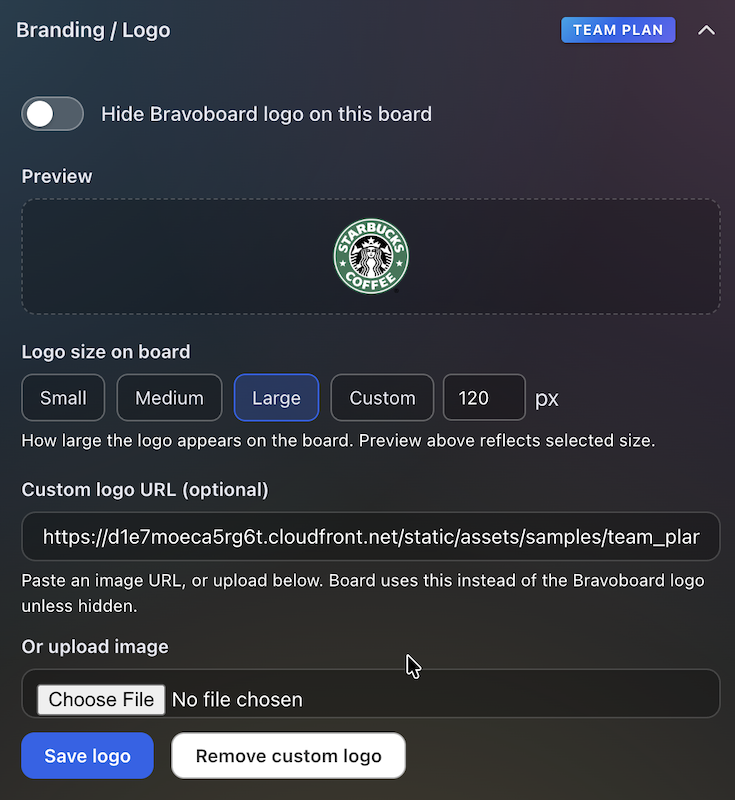
Branding & logo
Settings for uploading a logo and background so every team board matches your visual identity.
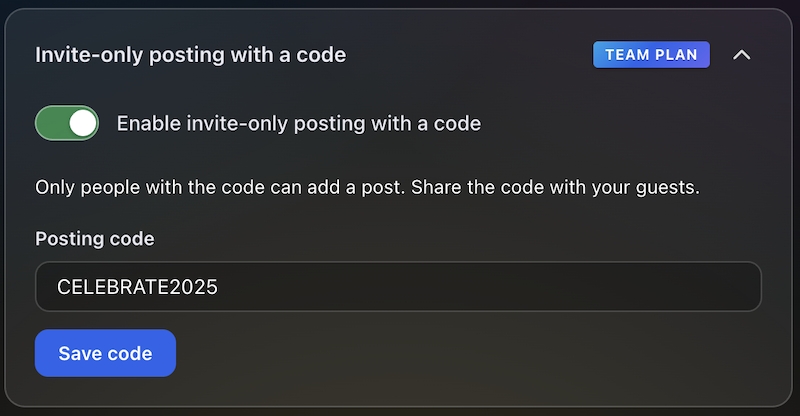
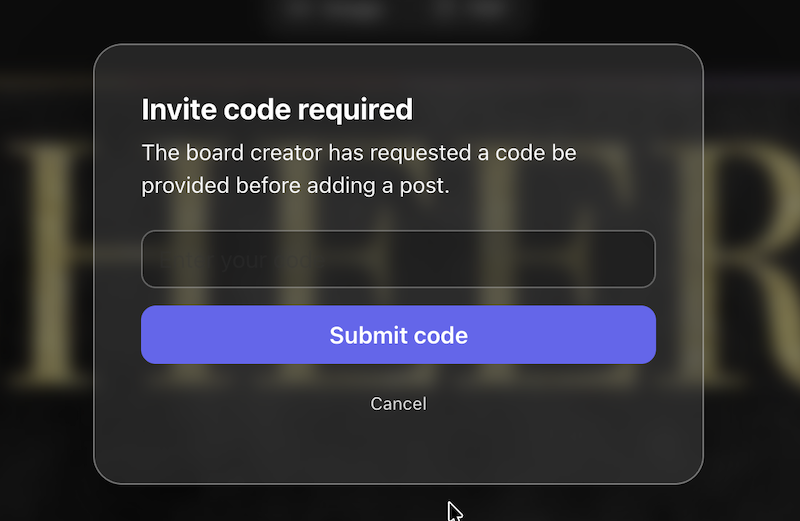
Post with Code / Invite only
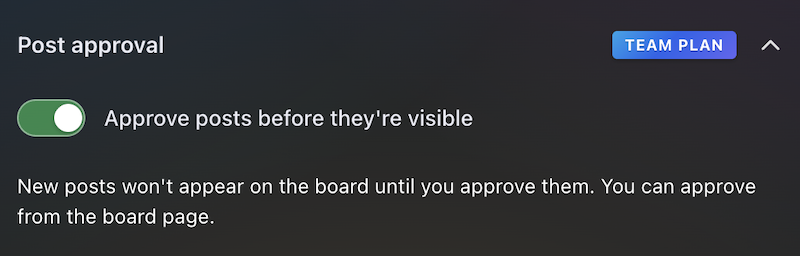
Require a posting code for messages, or limit contributions to invited people only—so the wall stays readable while you control who can post.
Post review
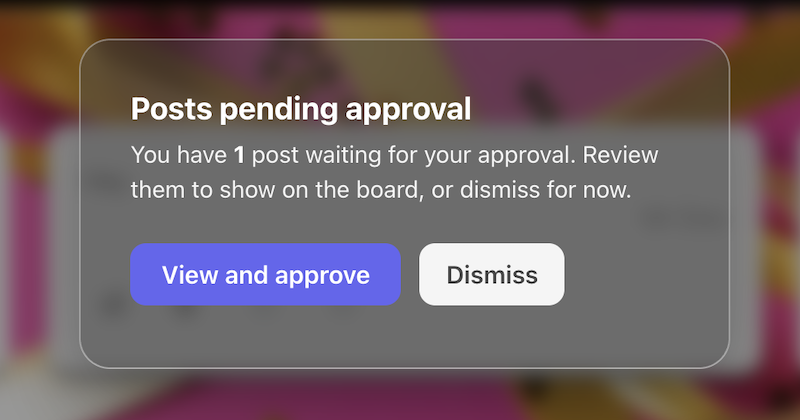
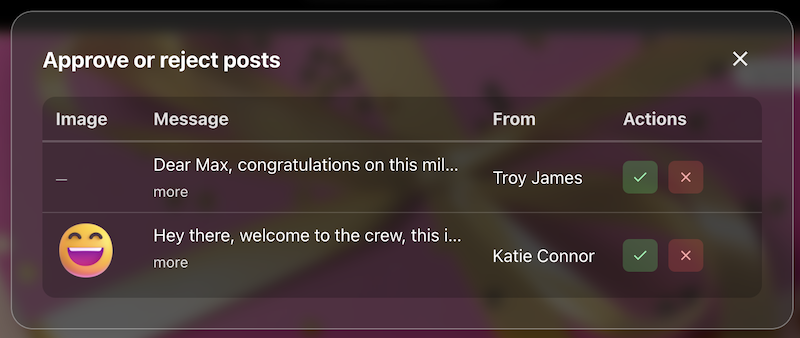
The queue or settings where approvers accept or hold posts before they appear on the live board.
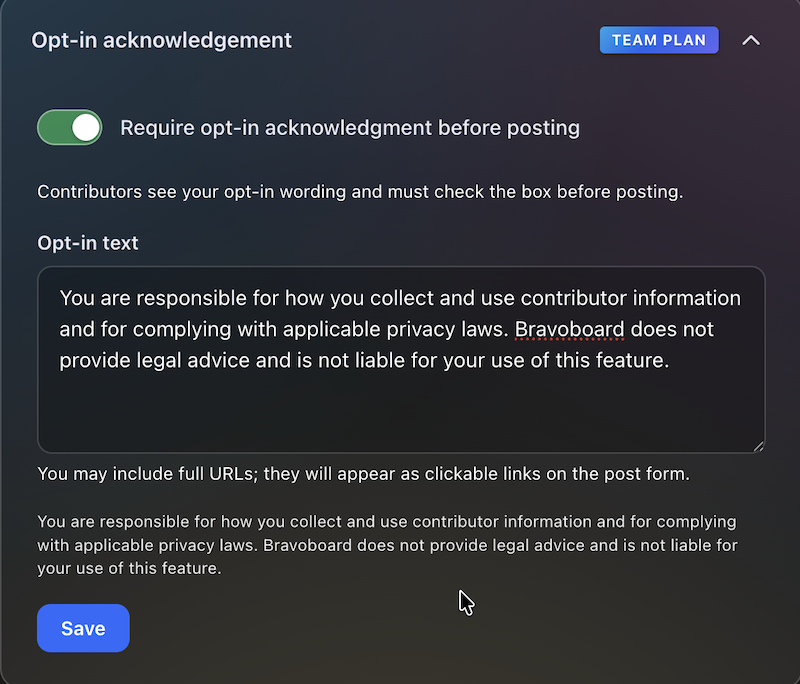
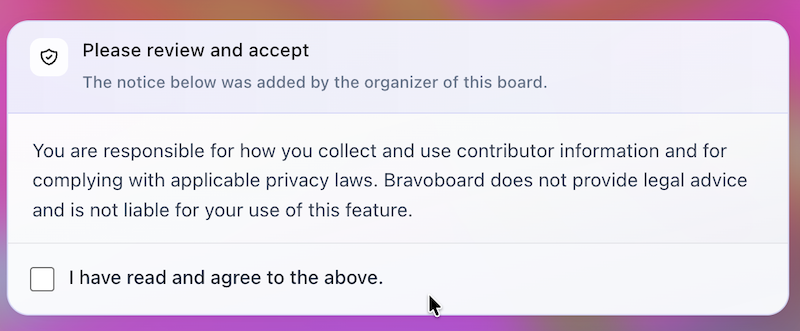
Contributor opt-in
Turn on the notice contributors must read, edit the text, and require a checkbox before posting—acknowledgements are stored with timestamps for audits and CSV export.
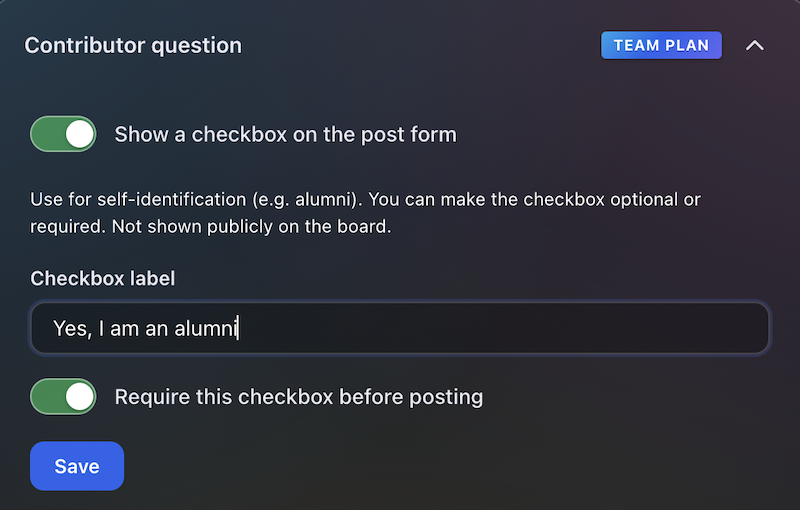

Contributor question
Contributors see this checkbox when they add a message. You write the label (for example self-ID or a light policy line), make it optional or required, and keep answers for admins and CSV export—not on the public wall.
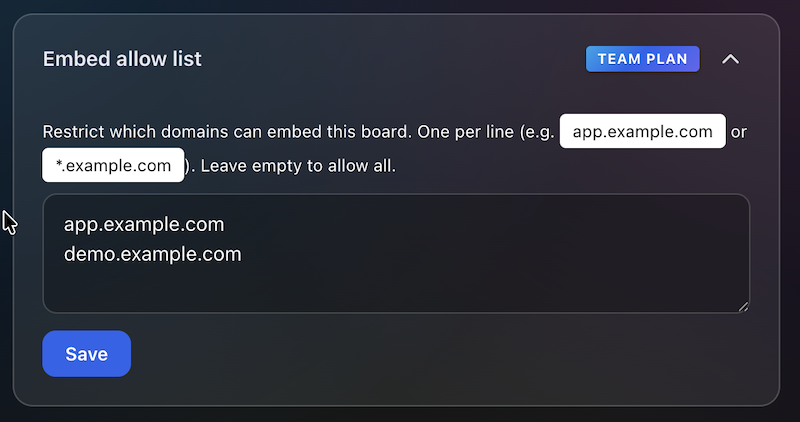
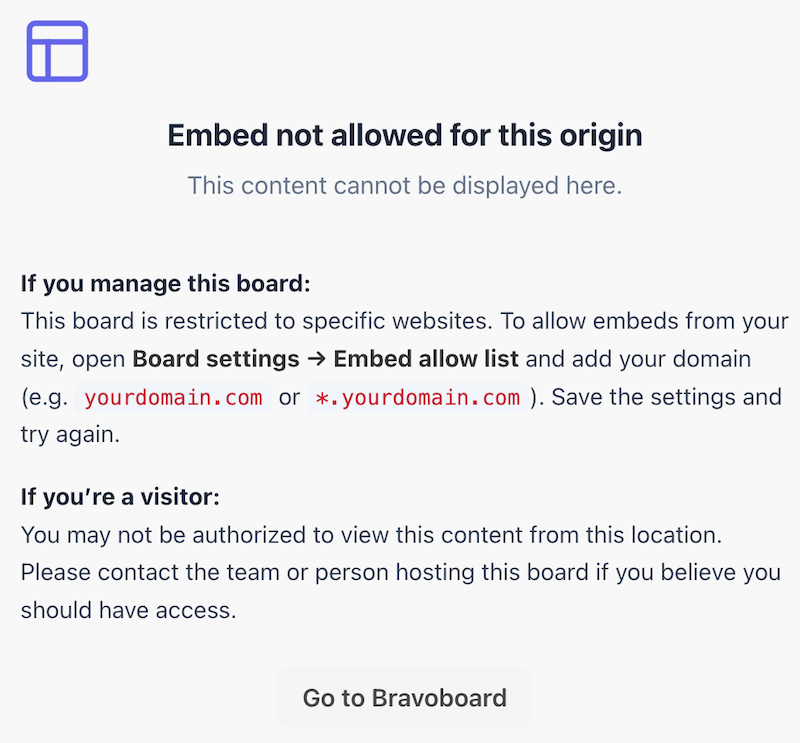
Embed domain control
Allowlist the sites that may embed this board, so it does not appear on random third-party pages.
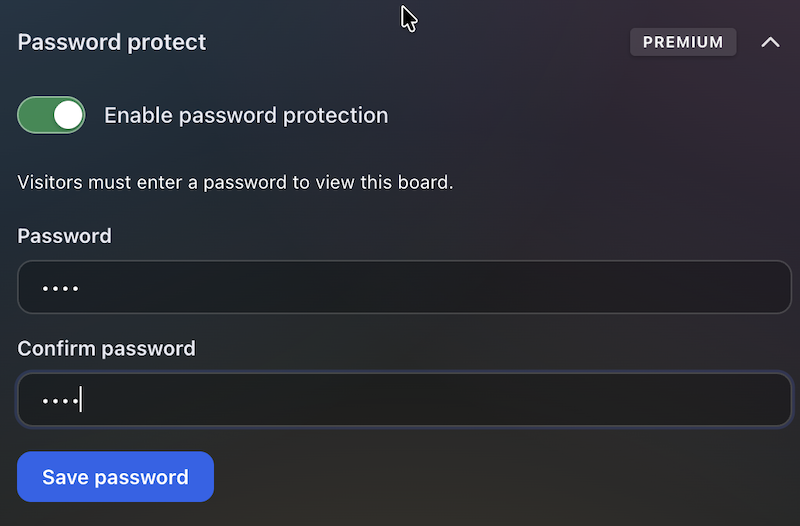
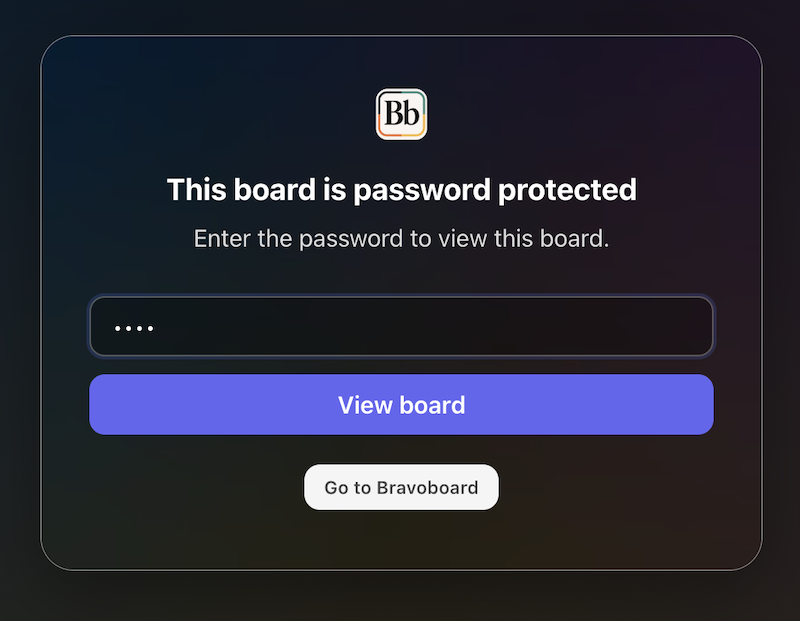
Password to view
Set a password so visitors must unlock the board before they can read it—separate from posting rules, posting codes, and invite-only contribution.
Latest Posts
You May Also Like

One board for a whole graduating class

Happy Birthday Wishes for Star Wars Fans

100 Welcome to the Team Messages for New Employees and Coworkers

50 Virtual Team Celebration Ideas for Remote Employees

How to Sign an Online Group Card (+ 75 Message Examples)

What to Write in a Group Card: 100 Message Ideas for Every Occasion

100 Birthday Wishes for Coworkers (Funny, Professional & Heartfelt)

100 Thank You Messages for Teachers to Show Your Appreciation

100 Boss Appreciation Messages to Say Thank You

100 Teacher Appreciation Messages to Say Thank You

100 Congratulations Messages for Every Occasion
