

Staff appreciation when the whole school or district shows up
When people picture staff appreciation, they usually picture something small.
A basket in the lounge.
A few thank-you notes on a table.
Coffee and pastries before first period.
A poster signed by one classroom.
Those things are lovely.
But appreciation starts to look different when you are thinking bigger.
A whole school.
Several schools.
A district.
Many buildings, many roles, many families, many schedules.
You still want people to feel seen.
You just need a way to do it that does not turn into noise.
That is where one shared board can be a beautiful thing.
Appreciation gets more meaningful when it includes everyone
One of the quiet challenges of staff appreciation week is that some people are easy to remember, and some are easier to overlook.
Families may naturally think of classroom teachers first.
But a school is held together by many hands.
Front office staff.
Counselors.
Instructional aides.
Custodians.
Bus drivers.
Librarians.
Crossing guards.
Food service teams.
Nurses.
Specialists.
Principals and assistant principals.
The people who keep the whole place running, often without much public praise.
A board helps widen the circle.
It gives families one place to leave kind words for the people who helped their children all year, even if they do not know every name or every title.
That matters.
This is not just an appreciation week activity
It is also a way of telling the story of a school community.
When many people contribute, the board becomes more than a thank-you wall. It becomes a picture of what families noticed.
The aide who made a child feel safe.
The office staff member who always greeted everyone warmly.
The bus driver who started every morning with kindness.
The teacher who stayed patient through a hard year.
The librarian who helped a reluctant reader fall in love with books.
These are small stories, but together they say something big:
“We see the people who care for our kids.”
Why this works especially well across multiple buildings
Once appreciation stretches across more than one campus, things can get messy fast.
Different principals send different messages.
The PTA posts one thing.
A district office sends another.
Some schools hear about it. Some do not.
One building runs with it, another barely participates.
A shared board can help bring calm to that.
It gives everyone one place to point to. One simple invitation. One space where messages live together instead of being scattered across emails, social posts, flyers, and chats.
It does not replace local events or treats. It simply gives the words somewhere to land.
And when the week is over, those words are still there.
Who can help make it work
This kind of appreciation effort does not need a huge committee. But it does help to have a few clear roles.
A district or parent-group lead can help set the tone.
School-site helpers can make sure each building feels included.
Office or communications staff can help share the link through channels families already trust.
That way, the whole thing feels organized without feeling corporate.
It is not about creating more work.
It is about making it easier for gratitude to travel.
A little shared look goes a long way
One of the nicest parts of doing this at scale is that it can still feel personal.
A simple title.
A warm welcome.
A shared visual look.
A few consistent words across schools.
That alone can make a district-wide effort feel connected.
You do not need heavy branding. Just enough that families can tell this belongs to the same week, the same spirit, the same effort to say thank you well.
The board should feel familiar, calm, and easy to join.
Keep the invitation simple
Families are busy, especially near the end of the school year.
So the ask should be light.
Something like:
“Leave a short thank-you for a staff member who made a difference this year. A few kind words is enough.”
That is enough direction for most people.
You can also gently remind families that appreciation is for all staff, not only classroom teachers. That one sentence can make the whole board feel broader and more thoughtful.
A little structure helps at this size
Because larger school communities include many voices, a little structure can be kind.
It can help to decide:
- who is sharing the link
- how often it will be shared
- when new messages will pause
- who will keep a copy of the messages afterward
If the board is likely to get a lot of traffic, it may also help to review messages before they appear. Not because you expect the worst, but because staff appreciation should feel peaceful, generous, and safe.
Especially at scale, a little care goes a long way.
Why the handoff matters
This is one of the most practical and overlooked parts.
When the week ends, someone often wants to use the messages again.
Maybe the PTA wants a record.
Maybe the principal wants to quote a few lines at a staff lunch.
Maybe someone is putting together a slideshow or end-of-year reflection.
Maybe the district wants to pass along the words in a tidy way.
That handoff is part of the value.
The board is not only for the live moment. It can also become a simple, meaningful record of what families wanted staff to hear.
That makes the effort feel lasting, not fleeting.
Why this is such a good fit for Bravoboard
A lot of appreciation tools are built around one person or one event.
This is different.
This is many buildings, many job titles, many families, and many small acts of care, all gathered into one place.
That is what makes it such a strong, less obvious use of Bravoboard.
It is not just “thanks for teacher appreciation week.”
It is a fuller kind of gratitude.
One that says a school is a community, and communities are held together by many people whose work deserves to be named.
If you are the one organizing it
If you are helping run something like this, keep it gentle.
You do not need a perfect rollout.
You do not need ten reminders.
You do not need everyone to write a long message.
You just need one clear invitation, one welcoming space, and one shared understanding that every role matters.
That is enough to make people feel seen.
And in a school system, feeling seen can mean a lot.
Ready to collect messages? Create your board in 60 seconds.
Create your boardComments
Comments appear after a quick review (usually within 3 hours). Be kind and on-topic
Comments (1)
this is nice. staff appreciation stuff can get uneven fast and this feels like a simple way to include more ppl
Add a comment
Thank you—we received your comment
Comments appear after a quick review (usually within 3 hours).
See it in action
Explore the sample boards below, then create your own for your group.
⟡ Bravoboard Samples
Get inspired by real boards
Real sample boards for everyday celebrations and milestones. Explore Bravoboard use cases
Sample gallery
Occasion and celebration boards
Browse sample boards and digital celebration walls for birthdays, holidays, work anniversaries, thank-yous, farewells, and more. Each link opens a real Bravoboard so you can see how people add messages and photos on a shared page—the same experience you get for personal boards. If you are also evaluating Bravoboard for a workplace, there are additional samples below for branding and admin-friendly privacy and moderation controls.
Sample board links open in a new browser tab.

Happy Holidays

Work Anniversary


Happy Birthday!

Get Well Soon / Recovery

Deepest Sympathies

Virtual going away card

Work Promotion

Joy and Wonder!
Celebrating Parents

4th July Holiday

Just Be Creative
Looking for workplace-oriented examples? Samples below cover branding, access rules, moderation, and embed settings.
Team plan
What guests see (Live boards)
Open a sample to experience the board the way a visitor does. For Opt-in & acknowledgement and Contributor question, open the board and then use Add message (or your board’s equivalent)—those controls appear on the new-post form, not the wall.

Branded board
See your logo and background on the wall so the board feels on-brand for your organisation.

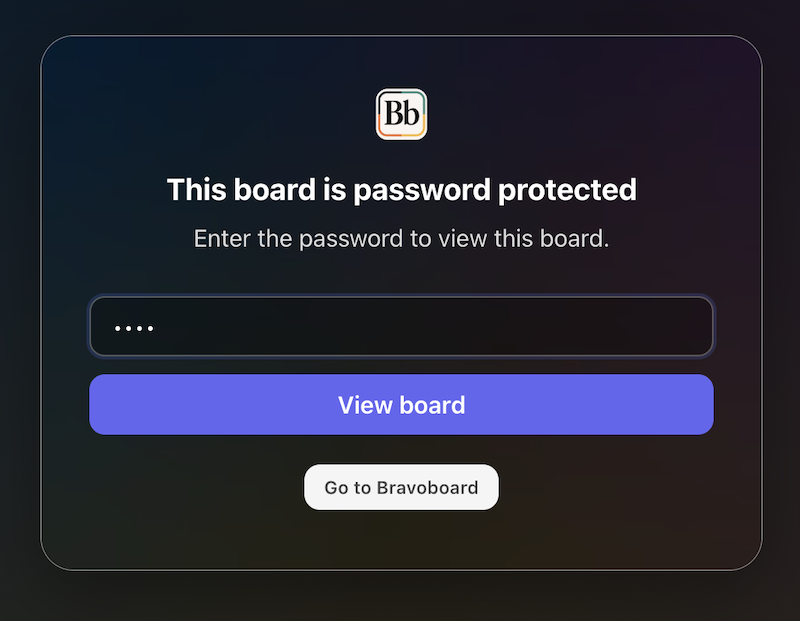
Password to view
Guests must enter the password before they can see the board. Try adding a message, use BRAVO as the password to unlock.

Post with Code / Invite only
Anyone who can view the board still needs the posting code before they can add a message. Try adding a message, use invite code YOUROCK when prompted.

Opt-in & acknowledgement
Open the board, then start a message—guests see your notice and must tick to acknowledge before they can post. Bravoboard records each acknowledgement with a timestamp.

Contributor question
Same flow: open the board, then add a message—guests see your custom yes/no checkbox (your wording). Look for [] I would like to be included in future opportunities, in this example.

Embed & domain restriction
The same board experience, meant to be embedded on sites you have allowlisted.
Guests never see moderation queues or approval screens—those are for board owners and team admins. Use the Screenshots — how teams govern boards row for post review settings and the pending queue.
Team plan
How teams govern boards (screenshots)
These panels are where your team set rules.
Click a screenshot to open a larger view. Cards with several panels group those steps together—use the arrows in the viewer to follow the workflow.
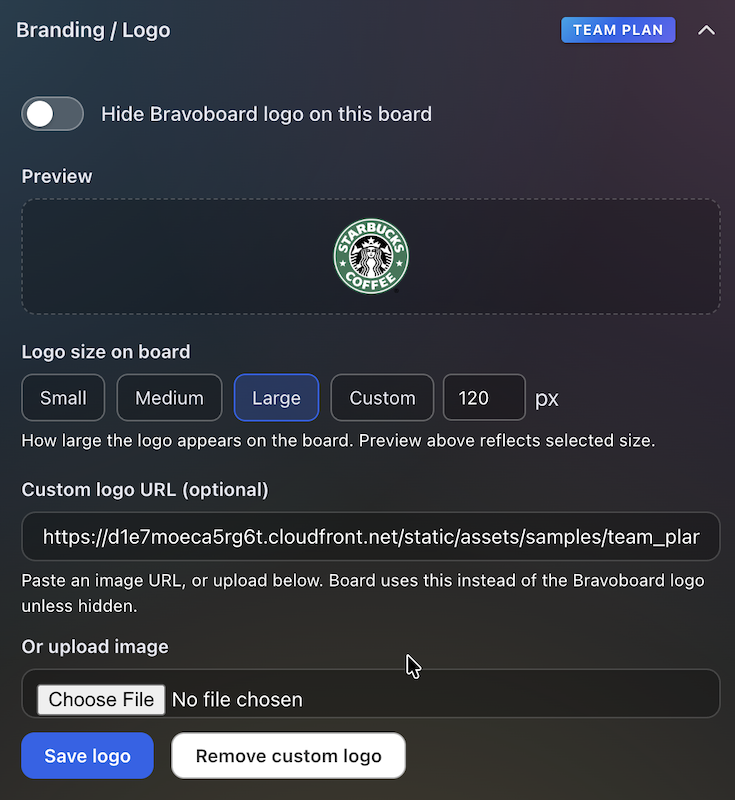
Branding & logo
Settings for uploading a logo and background so every team board matches your visual identity.
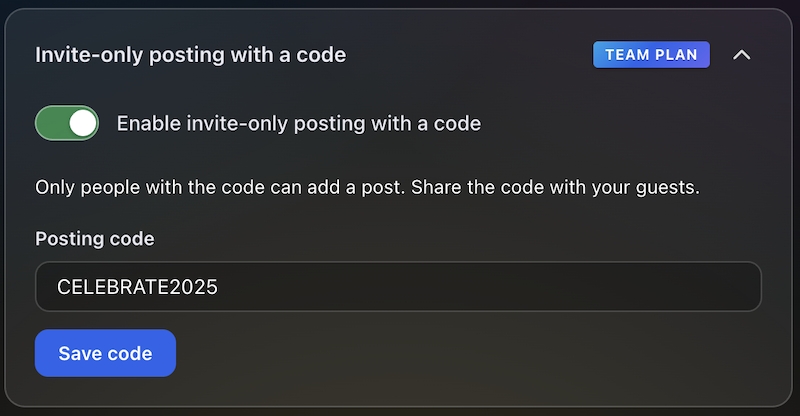
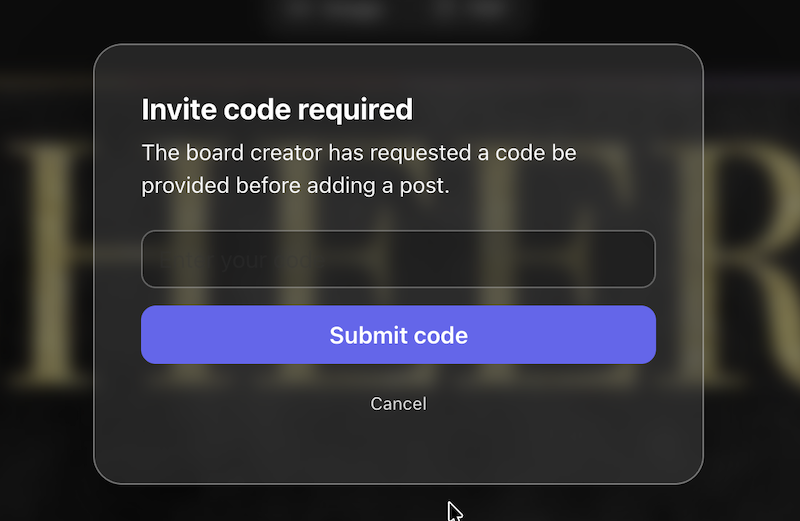
Post with Code / Invite only
Require a posting code for messages, or limit contributions to invited people only—so the wall stays readable while you control who can post.
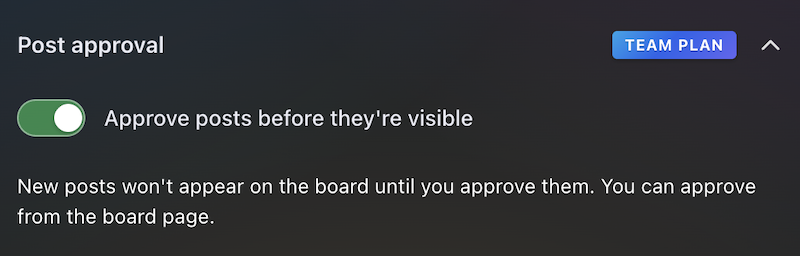
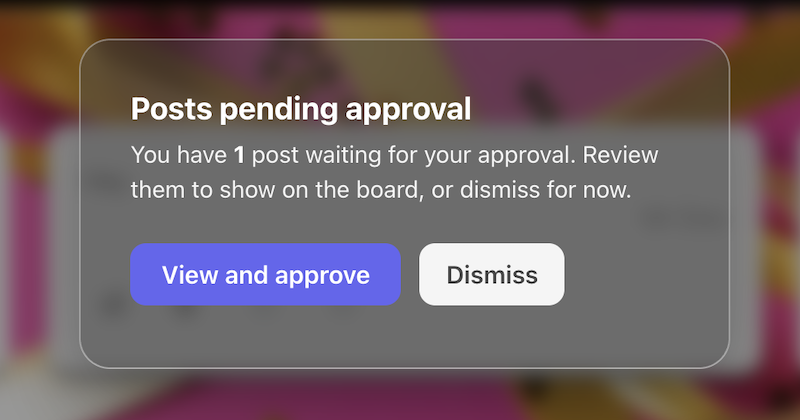
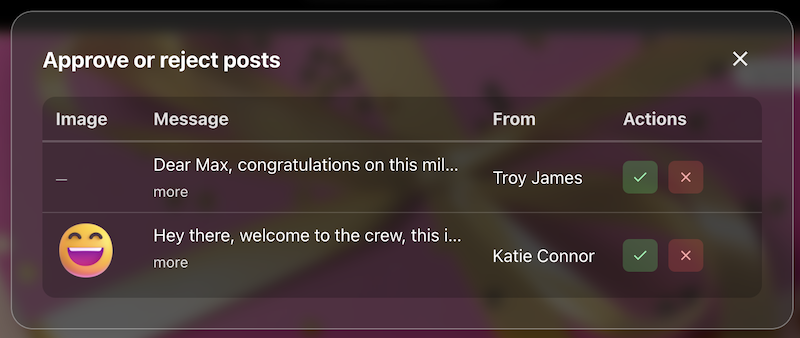
Post review
The queue or settings where approvers accept or hold posts before they appear on the live board.
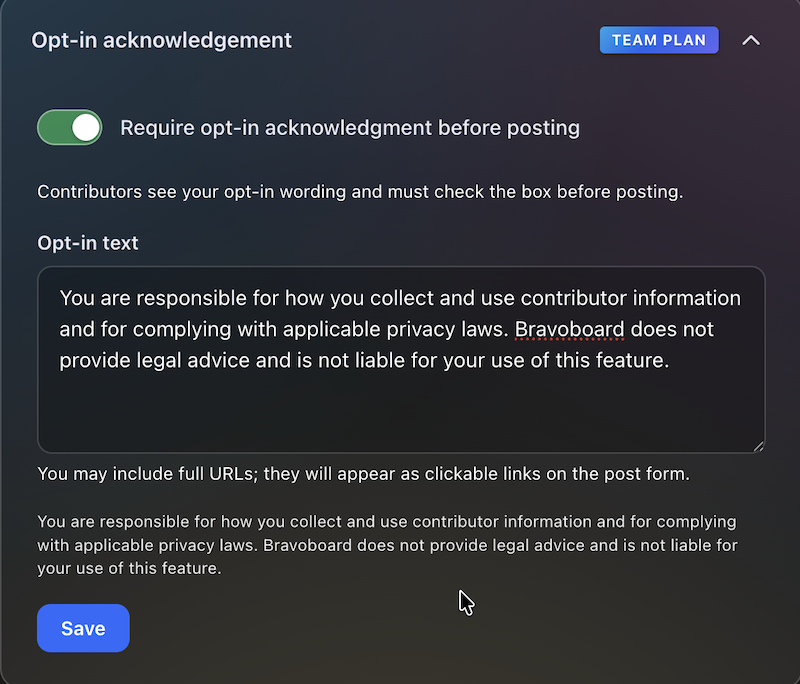
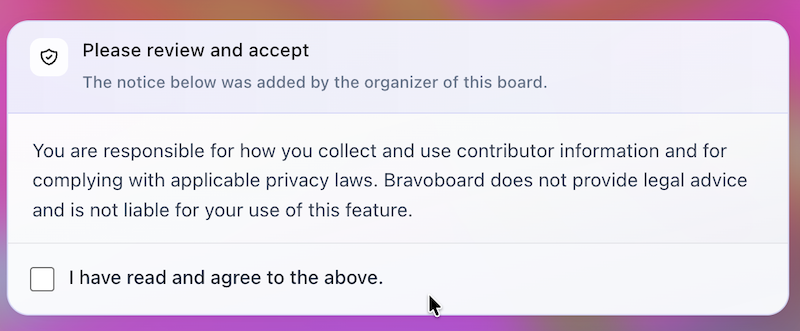
Contributor opt-in
Turn on the notice contributors must read, edit the text, and require a checkbox before posting—acknowledgements are stored with timestamps for audits and CSV export.
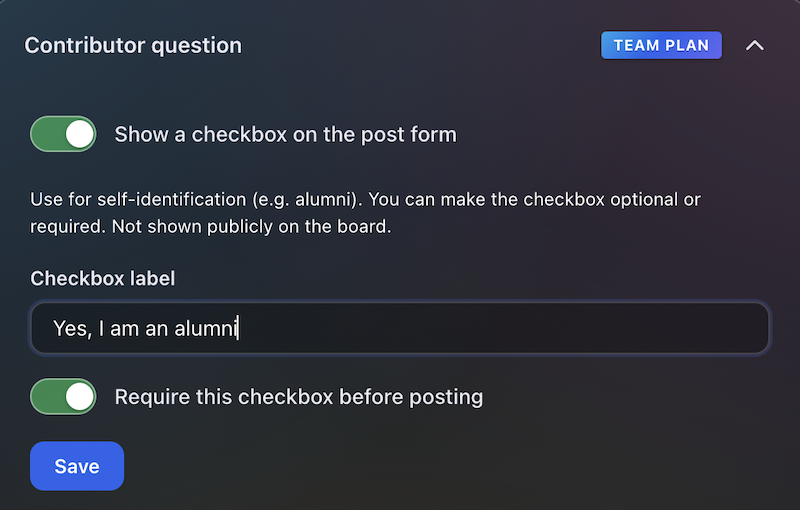

Contributor question
Contributors see this checkbox when they add a message. You write the label (for example self-ID or a light policy line), make it optional or required, and keep answers for admins and CSV export—not on the public wall.
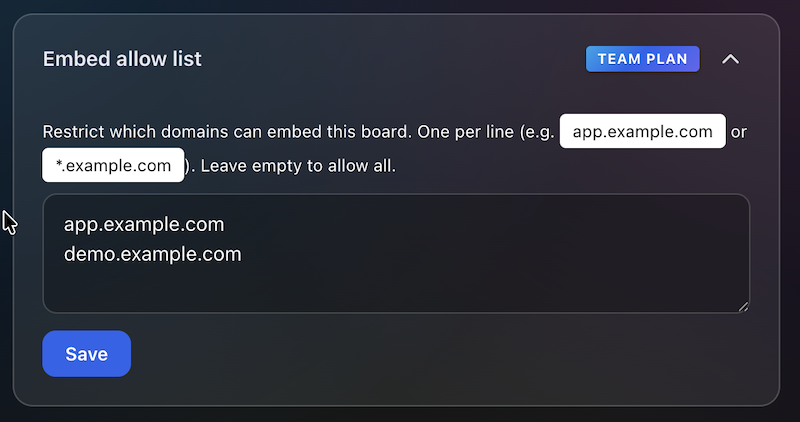
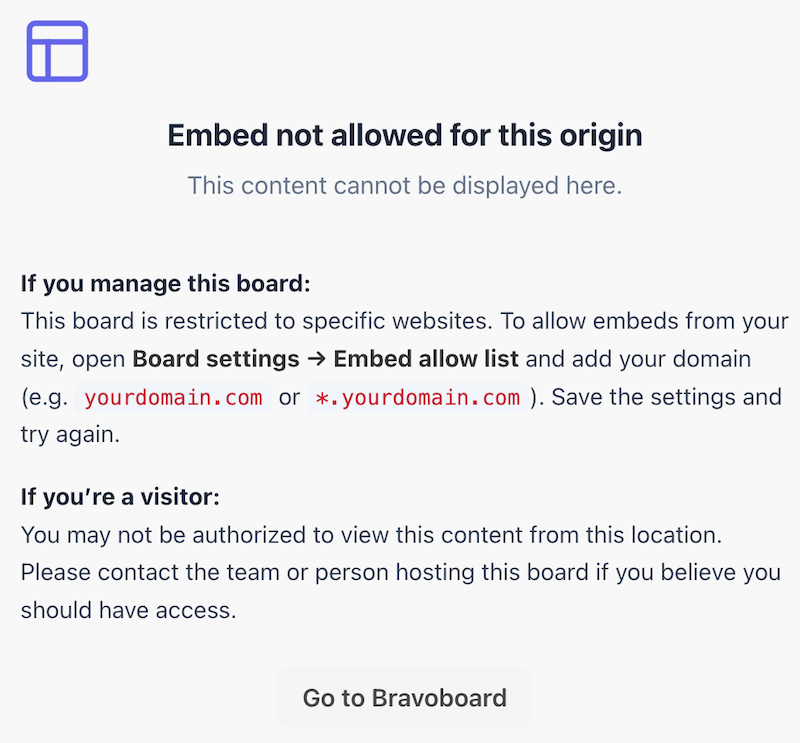
Embed domain control
Allowlist the sites that may embed this board, so it does not appear on random third-party pages.
Password to view
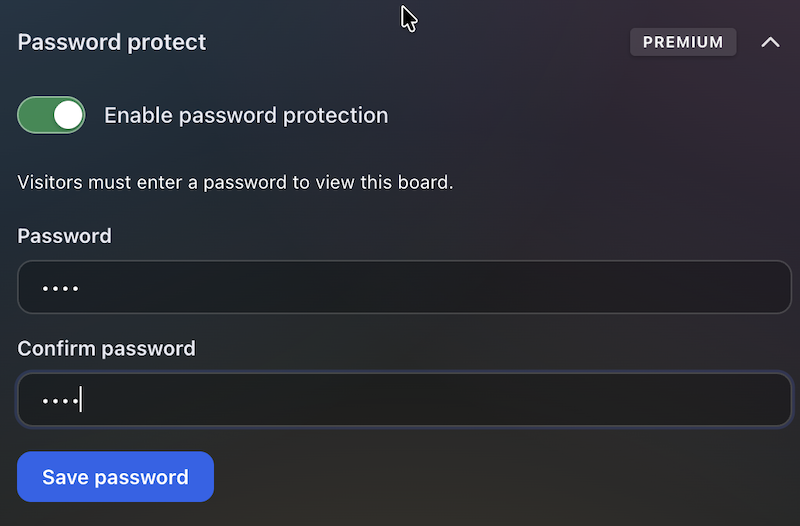
Set a password so visitors must unlock the board before they can read it—separate from posting rules, posting codes, and invite-only contribution.
Latest Posts
You May Also Like

One board for a whole graduating class

Happy Birthday Wishes for Star Wars Fans

100 Welcome to the Team Messages for New Employees and Coworkers

50 Virtual Team Celebration Ideas for Remote Employees

How to Sign an Online Group Card (+ 75 Message Examples)

What to Write in a Group Card: 100 Message Ideas for Every Occasion

100 Birthday Wishes for Coworkers (Funny, Professional & Heartfelt)

100 Thank You Messages for Teachers to Show Your Appreciation

100 Boss Appreciation Messages to Say Thank You

100 Teacher Appreciation Messages to Say Thank You

100 Congratulations Messages for Every Occasion
